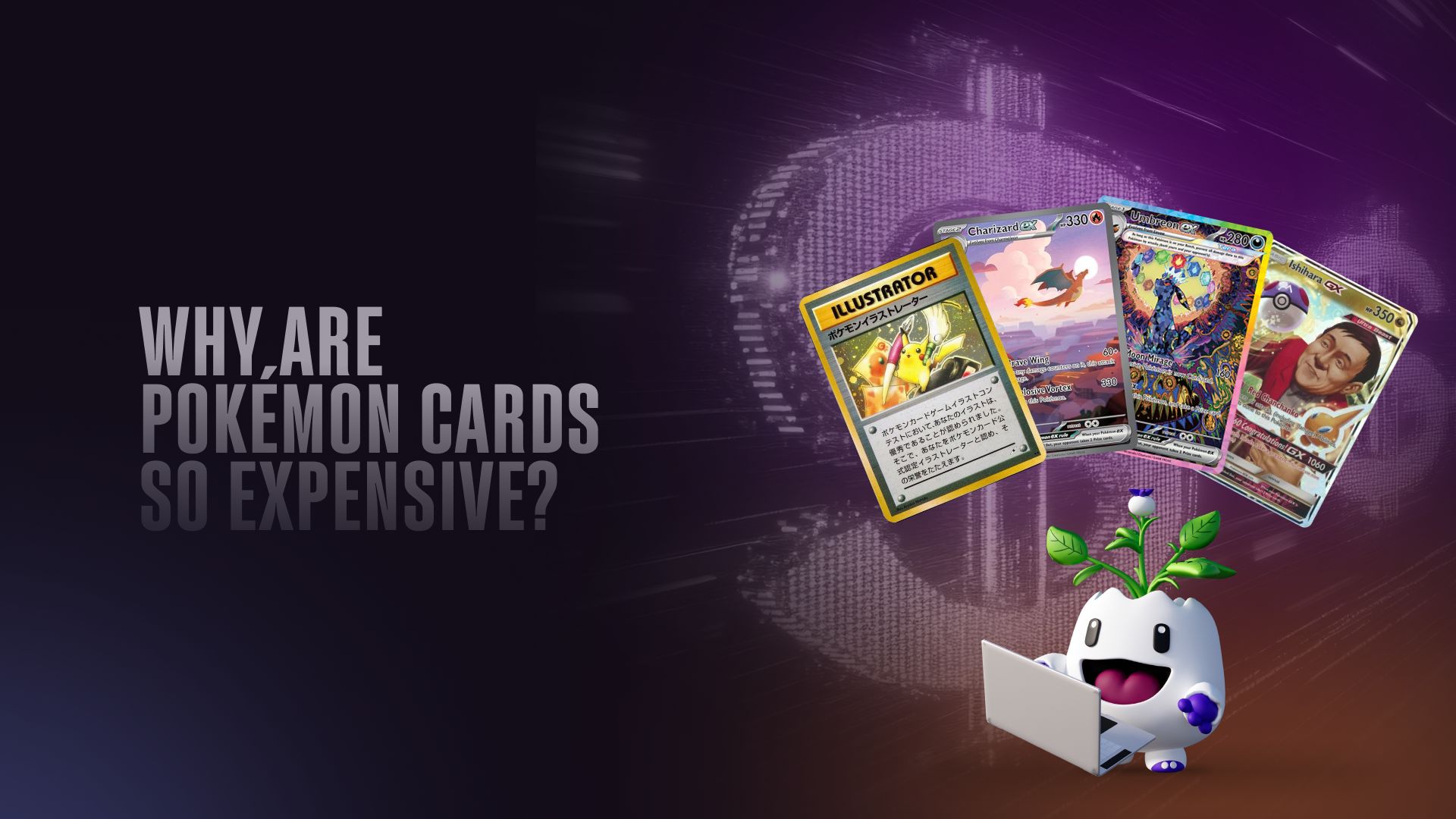
The prices of some Pokémon cards have gone through the roof in recent years, with some cards worth hundreds of thousands of dollars (or more).
In this guide, we’ll cover what’s driving these big price tags, so you know what to look for when you’re buying or selling your rare Pokémon cards.
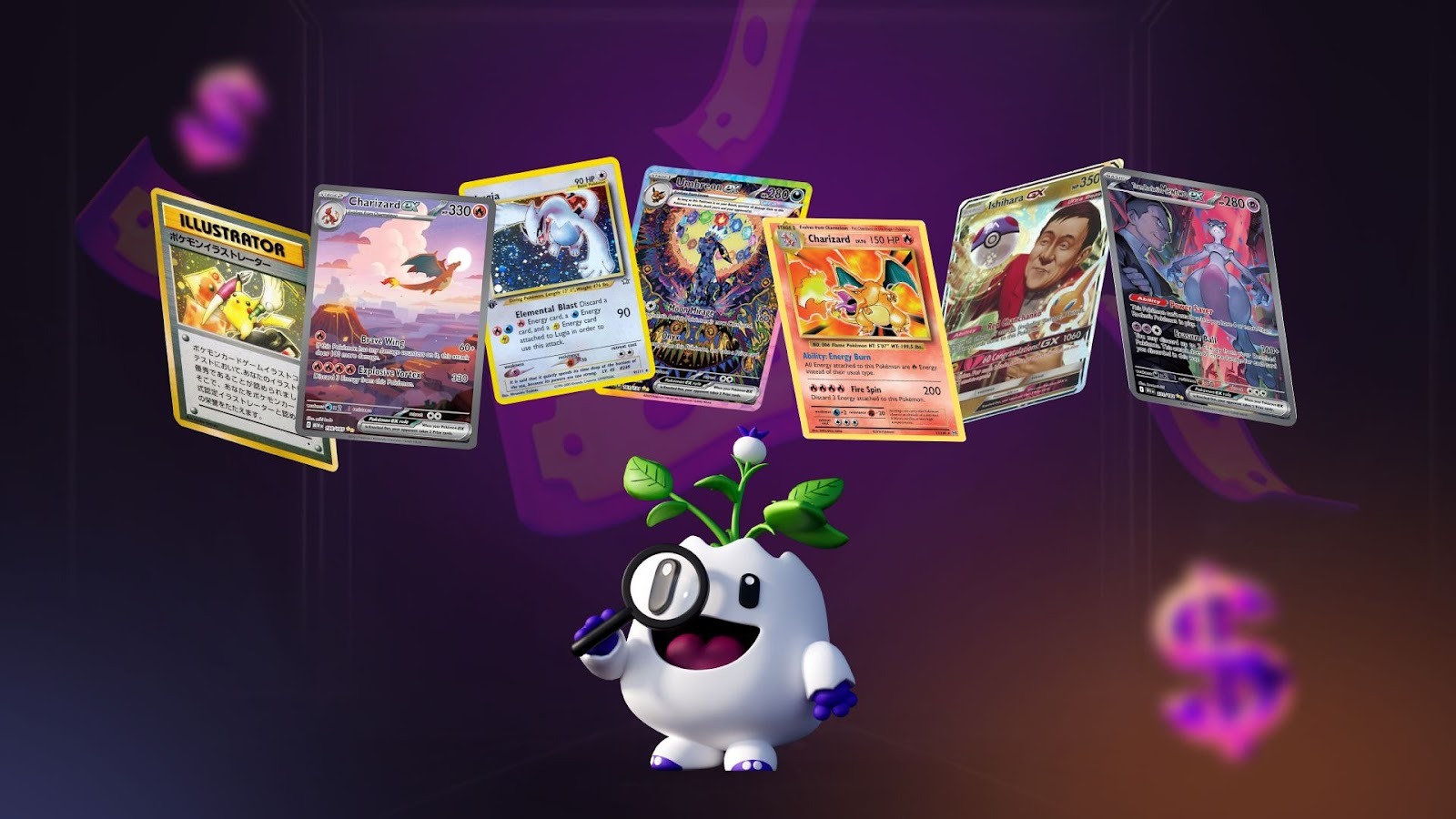
One of the latest Pokémon sets, Mega Evolution, launched in September 2025 and is currently worth around $1,800, with the most expensive card being the Mega Hyper Rare Mega Lucario ex, valued at ~$325 (at the time of writing).
A more recent set, Prismatic Evolutions from January 2025, is even more mind-boggling with a total set value of over $3,700, driven mostly by the Special Illustration Rare Umbreon ex card, which is considered to be worth over $1,000 in the US.
These cards cost much more than others, due mainly to the basic laws of supply and demand. Here’s a look at what drives that demand, and how you can tell that one card is worth more than another.
Rarity and scarcity are among the simplest criteria for card popularity. Rare cards are harder to collect by design, while scarce cards are usually just in higher demand, regardless of actual rarity.
Usually, it’s the ultra-rare cards that make headlines. Those include cards illustrated by well-known artists, Secret Rares that aren’t revealed until someone pulls one, or promo cards that were never part of a set to begin with.
You’ve probably seen some of the priciest cards described as ‘PSA 10s’. PSA isn’t the only major grading company, but they all do the same core job: assessing your card’s condition on a 1-10 scale and giving it an official grade.
Grading can make a significant difference in card value.
For example, a Charizard 1st edition from the Base Set is worth ~$3,700 ungraded, ~$24,000 with a PSA 9, and ~$167,000 if it’s PSA 10. We’re talking serious leaps in value here.
Supply and demand dynamics seem simple enough when taken at face value, but they’re actually pretty complex since they’re made up of many moving parts.
On the supply side, a lot depends on reprints, distribution and production cycles. Demand is also pretty fickle, since you can’t reliably predict which cards will explode in popularity.
For example, the Red Cheeks version of the Base Set Pikachu is a Common card, but since reprints turned him into Yellow Cheeks, this drove scarcity along with collector interest.
Market dynamics are another complex element of the equation. Sometimes, the value of a card can be artificially inflated when traders expect it to take off, buy large amounts, and then sell (often at a lower price) if it never reaches the level they were hoping for.
In the end, it helps to understand how supply, demand and hype cycles all play off each other, so you can avoid the trap of buying a card at its peak if it’s unlikely to hold that price.
Collector interest can also impact a card’s price, but it can sometimes be hard to anticipate.
Some Pokémon are consistently popular, like Charizard, Mewtwo and Pikachu, while others pick up momentum when new releases, such as the Scarlet & Violet video game, put them back in the spotlight.
Collector interest can also come from social media and influencers. In 2022, Logan Paul’s purchase of the Pikachu Illustrator PSA 10 drew widespread attention and attracted new audiences when it set the record for the most expensive Pokémon card ever bought.
Collectors sometimes chase very specific cards, especially misprints. However, this doesn’t always equate with extra value. If there’s no real demand for a misprint, it can end up being worth less than the standard version.
The Pokémon TCG launched in 1996 in Japan and in 1999 in the US. In the almost three decades since, the way cards are printed, distributed, and marketed has changed considerably.
Older cards tend to be worth more than your common contemporary cards, especially if they’re in good condition and graded.
On its own, though, age isn’t enough. Nobody wants a beat-up old card that collected dust in your parents’ basement. Age drives value when it is tied to both nostalgia and other factors from that time, such as how the cards were made or special events when certain promos were released.
Many collectors also play Pokémon TCG cards competitively. The majority of cards are pretty cheap, since they were printed for playing rather than hoarding for investment purposes.
However, competitive play can impact a card’s value. When a card performs well in tournaments, demand can rise as players try to copy winning decks, pushing the price up. These prices usually fall again once the card drops out of the meta.
For collectors who also play, the “most valuable” card is often just the one that fits best in their deck, which shows that price and personal value aren’t always the same thing.
If you’re ready to start collecting, you can get your hands on tokenized Pokémon cards on Magic Eden.
Virtually rip packs for that classic surprise pull or shop the marketplace for specific cards you want. One of the best parts is that once you own a card, you can redeem the NFT for the IRL, physical version. Just submit your details and pay a shipping fee, and the card will be sent straight to you by Magic Eden’s partner, Collector Crypt.
Connect your wallet to Magic Eden today to start exploring Pokémon NFT Packs.
Pokémon cards can sell for impressive amounts if they’re old, rare, part of a special release or in high demand among collectors. Most cards aren’t worth much, since many are simply created for competitive play, but rare cards in excellent condition can reach surprisingly high prices.
For Pokémon fans, cards offer a great way to connect with the franchise. The Pokémon show and video games have been incredibly popular for decades, and a lot of people find nostalgic value in collecting Pokémon cards. Some cards, in particular, stand out, because of the characters featured, the artwork, their backstory, or the occasional misprint.
First edition Pokémon cards tend to be limited runs, making them scarce compared to later editions. However, not all first edition Pokémon cards are expensive, since their value depends on a number of other criteria.
Old Pokémon cards tend to be more expensive since they’re usually scarcer than newer cards, especially if they’re in good condition. Long before Pokémon card collecting reached today’s prices, people didn’t necessarily realize how much they could be worth, so a huge amount of those cards were lost. The ones that remain in circulation can command high values in part because there aren’t many of them left.
New Pokémon cards can be expensive for a few reasons. Firstly, new sets are in high demand with fans. When supply doesn’t match that demand, prices can soar. Chase cards are also popular and in limited supply, so the value of these cards can skyrocket. Scalpers and resellers can also influence the market. People buying up lots of stock, hoping to flip it for a profit, can artificially inflate card prices.
The information provided on this website is provided for general educational purposes only and is in no way financial or investment advice. Certain information may have also been provided to us or prepared by third parties; these materials are provided for convenience and are not an endorsement by Magic Eden. Magic Eden is not liable for any errors, changes or amendments to such information, including any actions taken in reliance on such information.